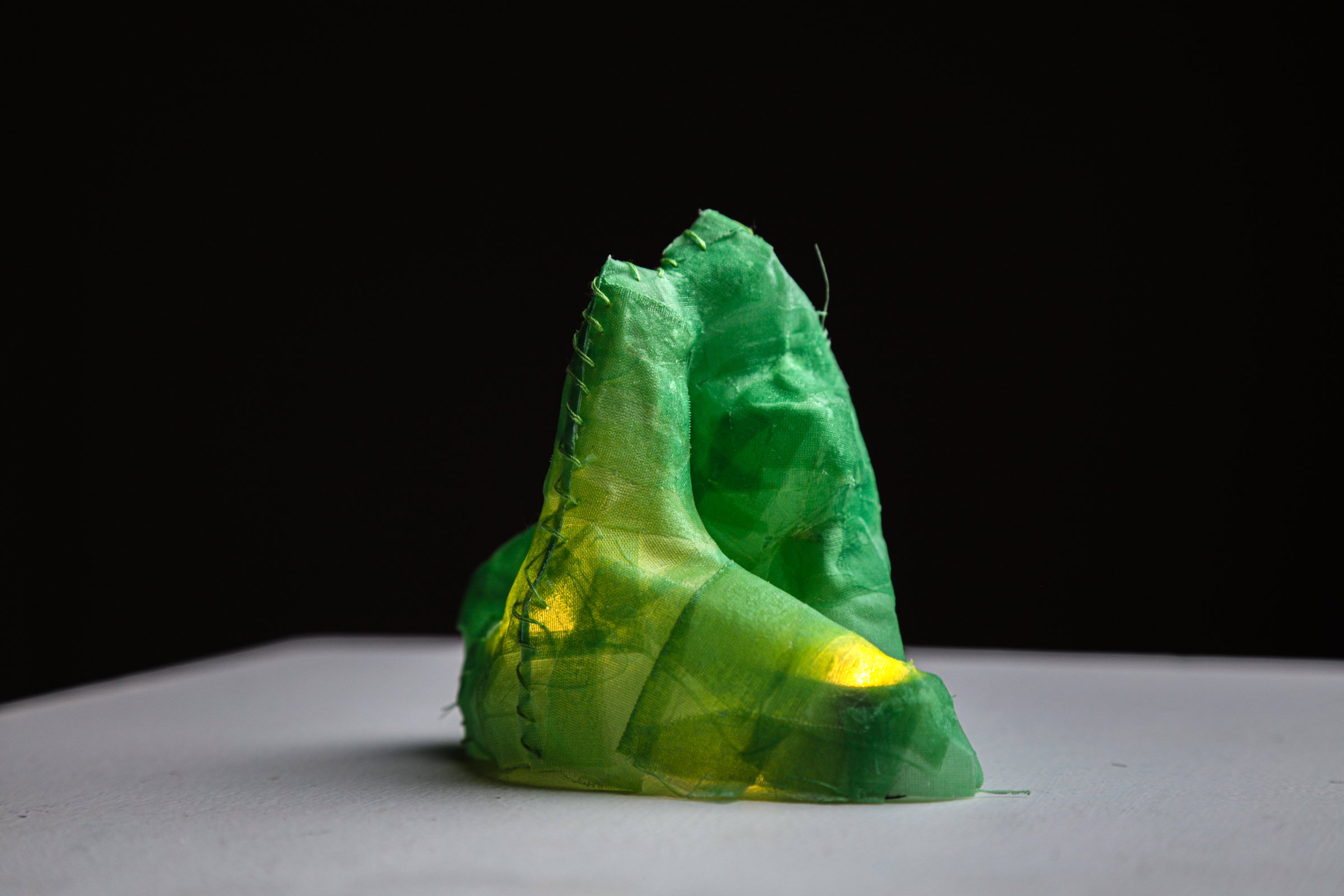
Fingers / Danji
Treated Hanbok Silk, Thread, LED Light (2026)
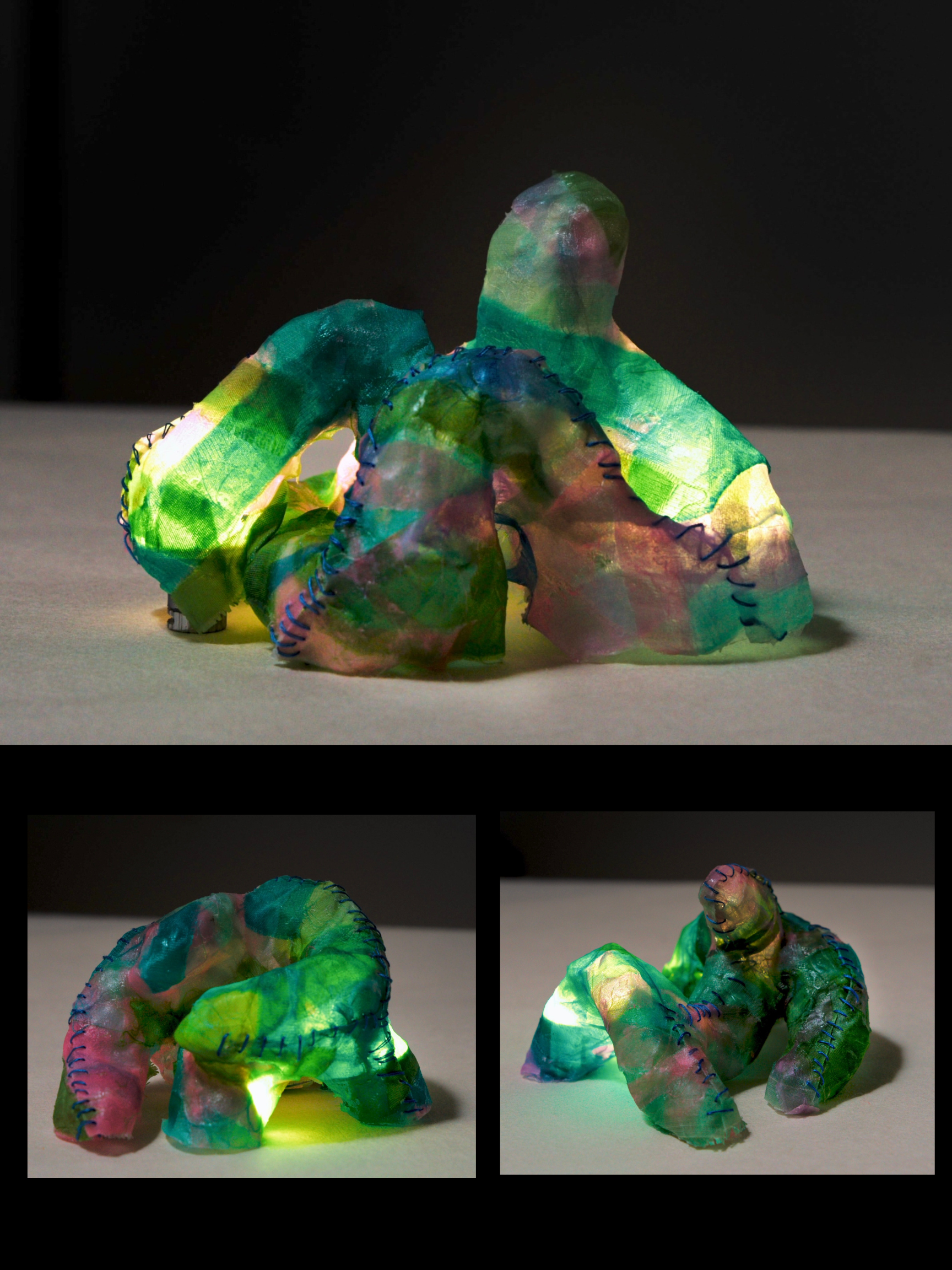
when elders eat our children’s futures
Hahn’s work explores multigenerational, collective survival. In her latest body of work, Hahn contrasted the sacrificial exercises of children on behalf of their parents in both Christian and Confucian traditions.
First exposed to the concept during Dr. Richard J. Smith’s Modern China at Rice University, Hahn continued her fascination with the paradox of the practice of gegu liaoqin (割股療親) or thigh slicing within Confucianism, where children committed a drastic filial act of slicing parts of their own bodies to offer up as medicine for their ailing parents, running counter to the practice of honoring one’s parents by not bringing any harm to the bodies given to them by their parents.
In Offerings, Hahn visually manifests the Korean counterpart to the Chinese practice of gegu liaoqin, through danji (단지,斷指), the act of finger severing. Though both gegu liaoqin and danji were written off as fringe folk medicine in historical records, Hahn seeks to bring to life the beauty and terror of their physical poetry of devotion.
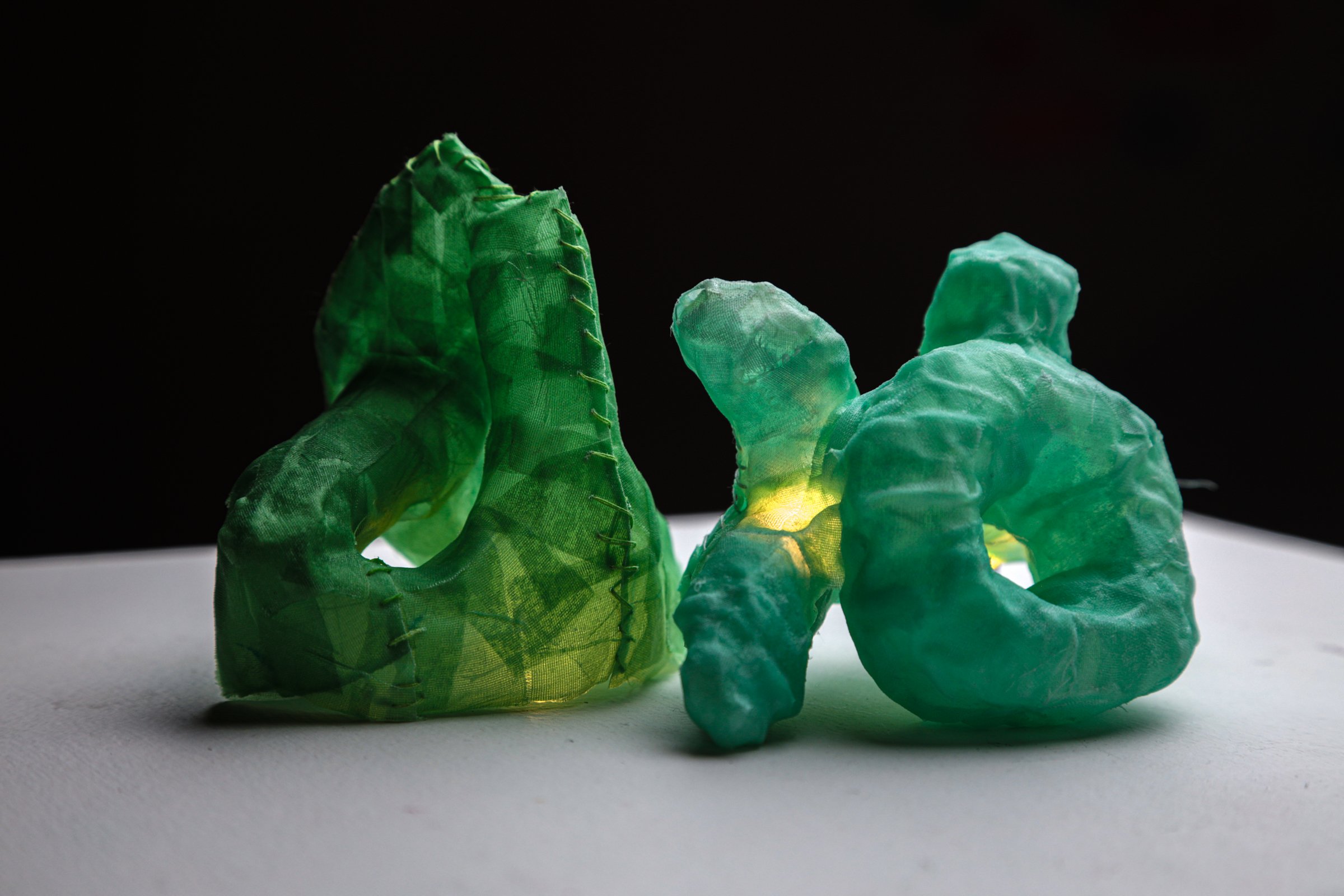
All photo documentation is courtesy of Mario Zie Chang (C) and Jorenzo Mallari (C) 2026
Hahn’s beautifully strange Fingers are her human-less practice of danji, finger severing for the sake of one’s parents or spouse. Each sculpture undergoes a grueling bodily reincarnation cycle, clay forms first shaped as the names of the artist’s family members, then wrapped in silk, and its clay bones extracted. Hahn “releases” each form by slicing them open from their silk forms, breaking the clay bones, and stitching together their husks to create illuminated exoskeletons reminiscent of both Hangul and human hands. Hahn’s sculptures caution us against the mystique of sacrifice, instead centering the person beneath who must endure the act.